You may be reading this because
- You have rectal cancer and have been told surgery would mean a permanent stoma
- You would like to know whether organ preservation could be an option for you before you agree to an operation
- You have had radiotherapy for rectal cancer and want to understand what watching closely involves
- Your rectal cancer has come back in the pelvis and you have been told the options are limited
- You are a surgeon or oncologist looking for a radiotherapy opinion on a complex pelvic case
What happens next
A consultation and an honest assessment
Dr Harinarayanan reads your scans, your biopsy and your history and examines you. Organ preservation depends on where the cancer sits, how big it is, whether lymph nodes are involved and how it is likely to respond. He tells you plainly whether it is a realistic option for you, or whether surgery is the safer route.
The team's view
Your case goes to the multidisciplinary team meeting, or MDT, where colorectal surgeons, oncologists and radiologists agree a plan together. Organ preservation is a decision shared between you, your surgeon and your oncologist, never one doctor alone.
Treatment, then close watching
Radiotherapy, often with chemotherapy, is delivered at GenesisCare Southampton. Afterwards, the response is checked with scans and examination. If the cancer has disappeared, you are watched closely at regular intervals. If it has not, or if it returns, surgery is still available.
What organ preservation means
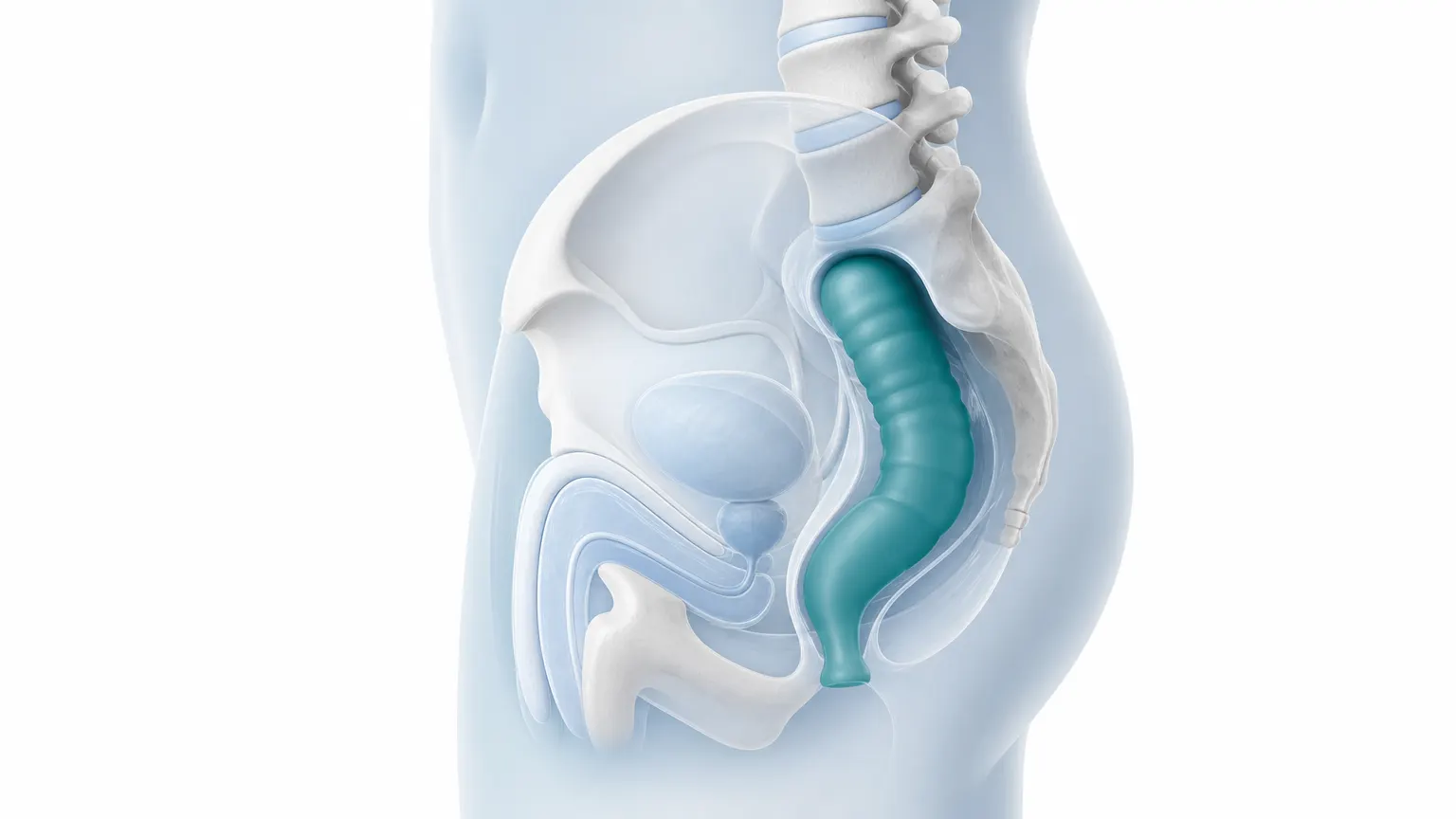
The rectum is the last section of the bowel, sitting low in the pelvis just before the anus. For a cancer there, the standard treatment for many years has been an operation. When the cancer sits very low, the operation removes the rectum and the anus together, and the bowel is brought out through the wall of the tummy as a stoma: an opening where a bag collects waste. It is permanent.
That surgery saves lives, and for many people it is the right choice. But it is a large change to live with, and for some people there is another route.
Organ preservation means keeping the rectum. Radiotherapy, usually with chemotherapy alongside it, is given first to shrink the cancer as far as it will go. Then, rather than operating straight away, the response is checked with scans and examination. If the cancer has disappeared completely, the operation may be avoided altogether. You are watched closely instead. If it has not disappeared, or if it comes back later, surgery is still there.
Who it may suit
Organ preservation is for suitable patients only. Whether you are one depends on where the cancer sits, how big it is, whether lymph nodes are involved, your general health, and how the cancer responds to treatment, which cannot be known in advance.
It is most often considered for cancers low in the rectum, where surgery would mean a permanent stoma, and for people for whom a major operation carries particular risk. It is also for people who, having understood the trade-off, would rather accept close watching and a possible later operation than a certain stoma now.
Dr Harinarayanan will examine you, read your scans and tell you honestly whether it is a realistic option. If surgery is the safer route for you, he will say so.
What treatment involves
Radiotherapy for rectal cancer is planned to give the tumour a full dose while sparing the bladder, the small bowel and the nerves nearby. Modern techniques, IMRT and VMAT, shape the dose to do that. Chemotherapy is often given at the same time, because it makes the radiation work harder; together they are called chemoradiotherapy. Treatment is delivered at GenesisCare Southampton, on the same site as Spire Southampton Hospital, and he sees you during the course.
Side effects build over the course: tiredness, looser or more frequent bowel motions, bladder irritation, sore skin. Most settle in the weeks afterwards. He will tell you what to expect before you start.
Watching closely afterwards
After treatment, the response is assessed with an MRI scan, an examination and a camera test. If the cancer has gone completely, you enter a period of close watching, with checks at regular intervals. The purpose is to find any regrowth early, while it is still small and the operation is still possible.
This is the honest heart of organ preservation. It offers a real chance of keeping your bowel, in return for a commitment to regular checks and the possibility of surgery later. It is a shared decision between you, your surgeon and your oncologist.
Rectal cancer that has come back
Cancer that returns in the pelvis after surgery or radiotherapy is difficult, and it is one of Dr Harinarayanan’s particular interests. Treating an area that has already had radiotherapy is called re-irradiation, and it needs careful planning around the dose given before. In selected cases it can be done. He also has an interest in intra-operative radiotherapy, where a dose is given during the operation itself, for complex pelvic surgery, and in MR-Linac SABR, which shapes a high dose very tightly around a recurrence.
None of these is right for everyone. He will read your scans and tell you what is realistic.
Research he led
Dr Harinarayanan was principal investigator for APHRODITE, a completed national trial of organ-preserving radiotherapy in rectal cancer. A principal investigator leads the trial at his centre and is responsible for the patients in it. Having led the research means he works from the latest evidence and a close understanding of how it applies in practice.
For referring clinicians
Dr Harinarayanan accepts referrals for rectal cancer where organ preservation is being considered, for total neoadjuvant and chemoradiotherapy approaches, for recurrent pelvic disease including re-irradiation, and for a radiotherapy opinion ahead of complex pelvic surgery, including intra-operative radiotherapy. He is a core member of the regional lower GI MDT at University Hospital Southampton and was principal investigator for the APHRODITE trial.
Please send a referral letter with diagnosis, stage, histology, pelvic MRI and staging CT, any prior radiotherapy plan and dose, the MDT outcome and the patient’s funding route. Letters and scans go to his secretary at Ann.Clay@uhs.nhs.uk, or use the referral form on the clinicians page. He aims to reply to referrals promptly.
How Dr Harinarayanan treats it
Precision radiotherapy, IMRT and VMAT
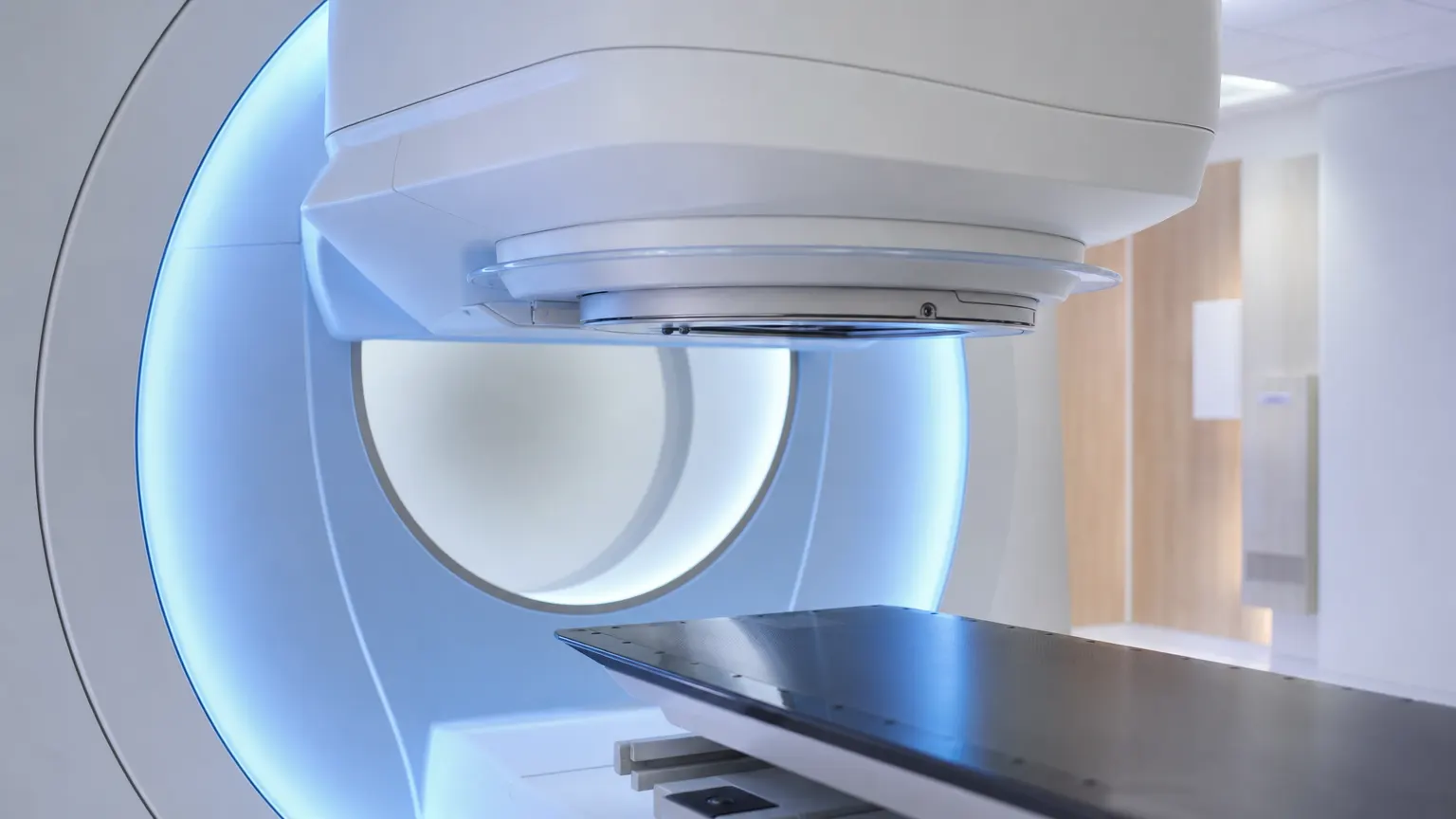
Radiotherapy uses carefully shaped beams of high-energy X-rays to damage cancer cells so they stop growing. Modern techniques such as IMRT and VMAT shape the dose to the tumour and spare what is around it. Dr Harinarayanan plans and oversees private radiotherapy at GenesisCare Southampton, on the same site as Spire Southampton Hospital, for bowel and rectal cancer and cancer that has come back after earlier treatment.
Read more →
Chemotherapy and systemic therapy
Systemic therapy means treatment that travels through the whole body in the bloodstream, rather than being aimed at one spot. Chemotherapy is the best-known kind. Dr Harinarayanan plans chemotherapy and other drug treatments as a consultant clinical oncologist, and they are delivered privately at GenesisCare Southampton, on the same site as Spire Southampton Hospital.
Read more →Conditions this applies to
Common questions
What does organ preservation mean?
The organ is your rectum. Preservation means keeping it rather than removing it. In organ-preserving treatment, radiotherapy, usually with chemotherapy, is used to shrink the cancer as far as it will go. If scans and examination show it has disappeared completely, the operation that would have removed the rectum may be avoided, and you are watched closely instead. If the cancer does not disappear, or comes back, surgery remains available.
Who is organ preservation suitable for?
It depends on where the cancer sits, how big it is, whether lymph nodes are involved, and how it responds to treatment, which cannot be known in advance. It is most often considered for cancers low in the rectum, where surgery would mean a permanent stoma, and for people who would find a major operation hard to recover from. It is not suitable for everyone, and Dr Harinarayanan will say plainly if surgery is the safer choice for you.
What happens if the cancer comes back after organ preservation?
This is why close watching matters. You are examined and scanned at regular intervals so that any regrowth is found early, while it is still small. If it is found, the operation that was avoided is usually still possible, so the door to surgery is not closed. That is the trade: a real chance of keeping your bowel, in return for a commitment to regular checks and the possibility of surgery later.
What was the APHRODITE trial?
It was a national research trial of organ-preserving radiotherapy in rectal cancer, now completed, and Dr Harinarayanan was principal investigator, which meant he led it at his centre. Trials like this test how best to give radiotherapy so that more people can keep their bowel safely. Having led the research means he works from the latest evidence and has a close understanding of how it applies in practice.
What if my rectal cancer has already come back in the pelvis?
Cancer that returns in the pelvis after surgery or radiotherapy is difficult but not always untreatable. Dr Harinarayanan has a special interest in complex pelvic recurrence. Options may include re-irradiation, which is radiotherapy to an area already treated, planned carefully around what was given before; intra-operative radiotherapy, given during surgery; and precise treatments such as MR-Linac SABR. He will read your scans and tell you honestly what is realistic.